

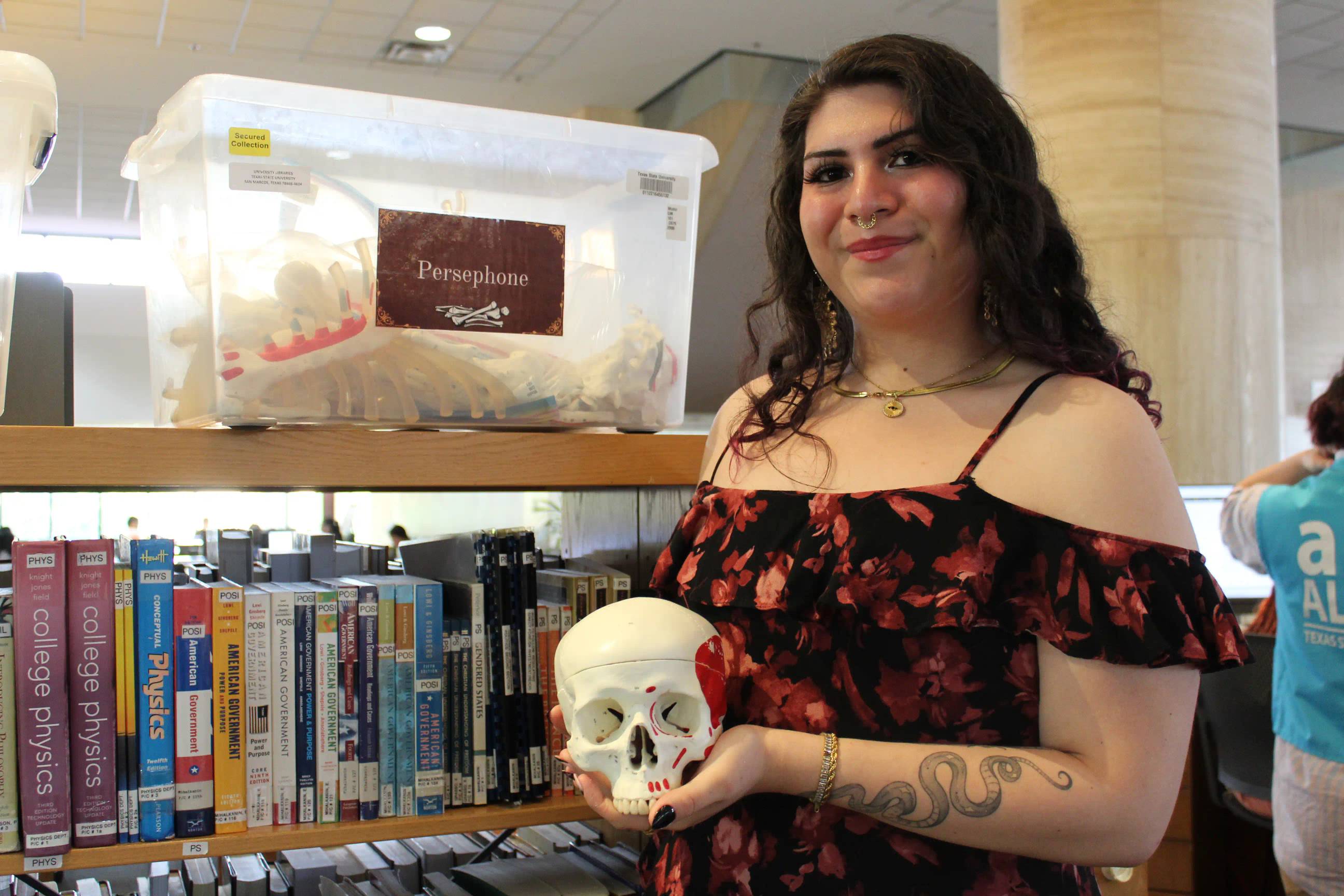
For many students enrolled in human osteology, learning doesn’t happen solely through textbooks or lectures, it happens hands-on, bone by bone. As a freshman navigating the rigorous demands of the course, Nathalia Garza quickly learned that direct interaction with skeletal materials was essential to mastering anatomical markers and structure.
While working as a student employee at Texas State University’s Albert B. Alkek Library, Garza, now a senior and an anthropology major noticed a missed opportunity. The library housed eight sets of human skeletal casts, but they were unorganized, poorly maintained, and inaccurately labeled, limiting their usefulness for study. What began as an observation soon evolved into a student-led initiative aimed at transforming how these resources served the campus community.
“I realized that these skeletal models had so much potential to support learning, but in their current state, they weren’t truly helping students the way they could,” Garza said.
Encouraged by a supervisor, Anna Midkiff to pursue the idea further, Garza connected with Sophia Mosbe, then interim head of public services at the Alkek Library, to explore the possibility of a formal project. Together, they developed a plan to reorganize, label, and improve access to the skeletal collection, ensuring it could better support independent learning across multiple disciplines.
The project addressed a need that extended beyond osteology students.
“What stood out was how many different students depended on these materials,” Garza said. “It wasn’t just osteology these models support learning across several science and health-related fields, all of whom require a strong understanding of bone structure in their disciplines.”
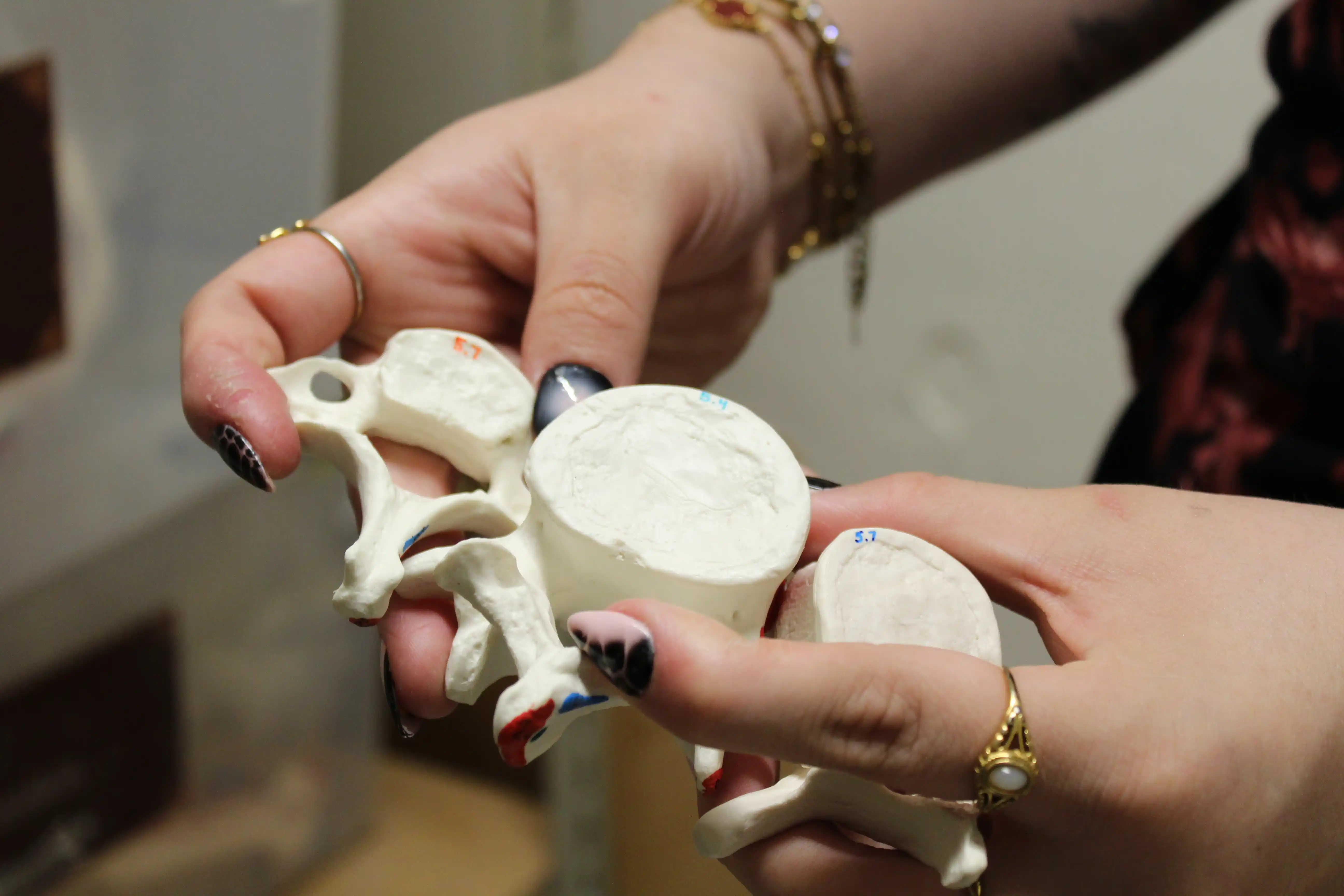
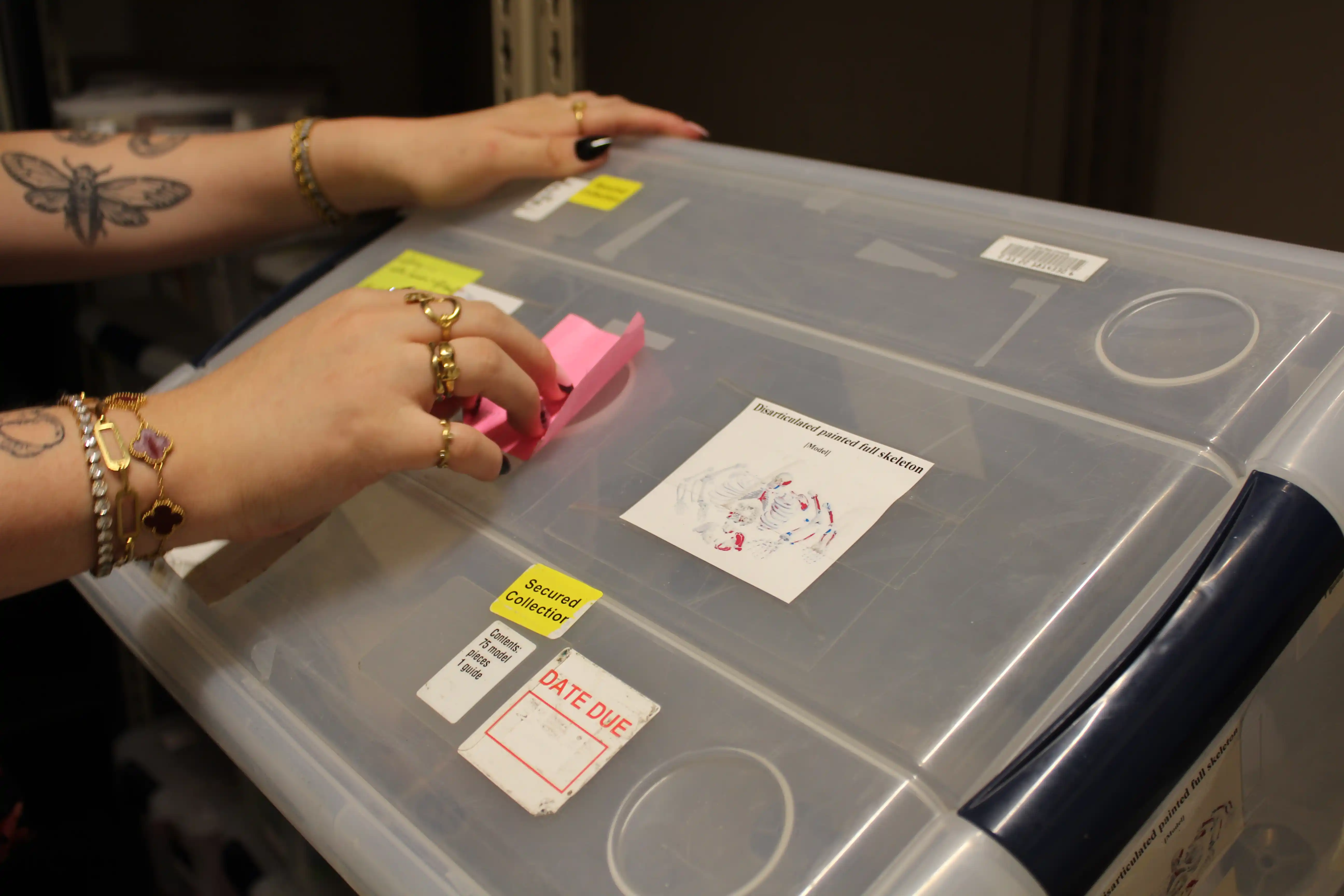
Alkek Library played a central role in bringing the project to life. Library staff provided guidance on proposal development, helped define deliverables, and supplied all necessary materials, including cleaning tools, tags, storage boxes, and the skeletal models themselves. Each bone was carefully cleaned, organized, and labeled with a unique identification number, improving tracking, circulation, and retrieval.
Collaboration with library staff also shaped the behind-the-scenes systems that would sustain the collection long-term. Their expertise informed the creation of metadata and circulation workflows, including checkout histories and notification processes to ensure materials were properly returned.
“Working with library staff taught me how much planning and structure goes into executing a project,” Garza said. “Their support made the project possible and sustainable.”
Beyond its immediate impact on student learning, the project fostered meaningful academic and professional growth. Through the experience, Garza developed skills in proposal writing, budgeting, inventory management, presentation, and problem-solving, competencies that extend far beyond the library setting.
When asked to describe Alkek Library as a person, Garza’s answer was: intellectual, creative, innovative, and ever-changing. Much like the project itself, the library continues to evolve in response to student needs, proving that sometimes, the most impactful improvements begin with a single observation and the support to act on it.